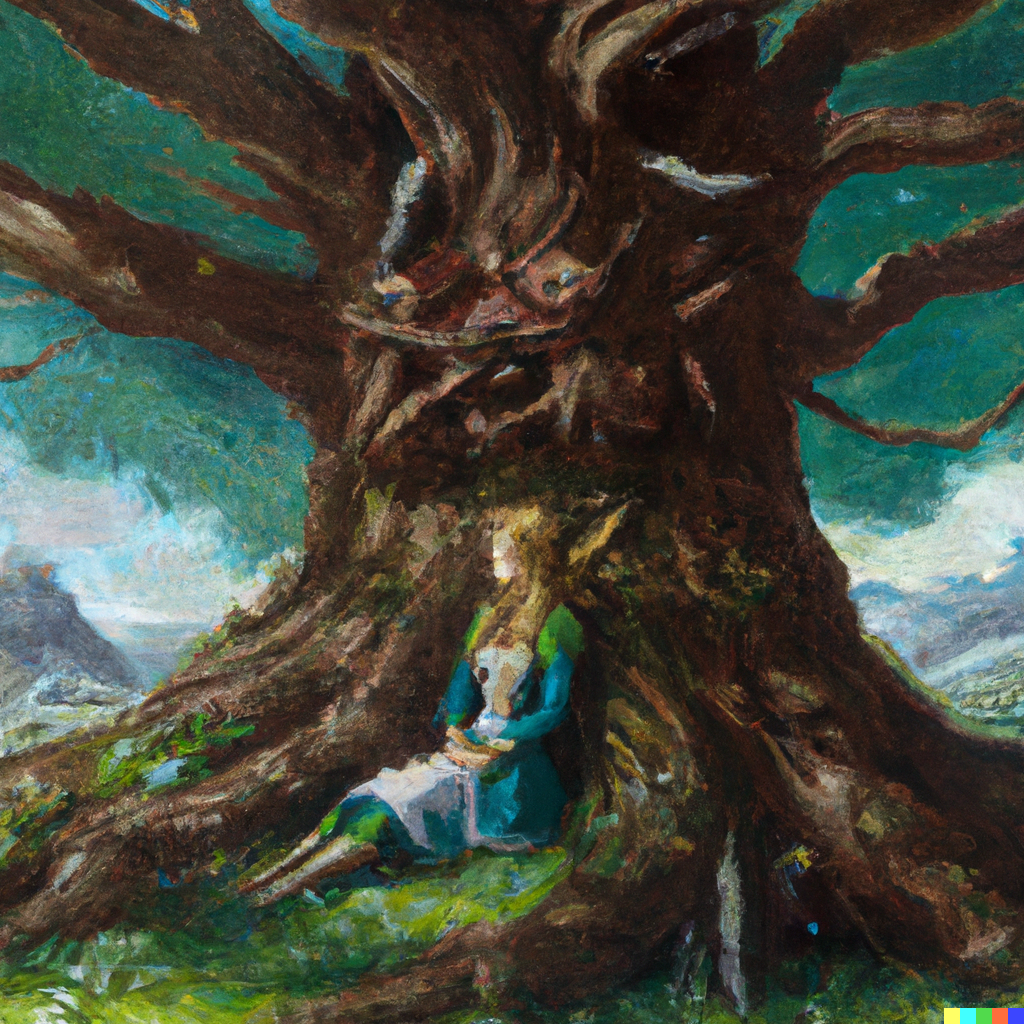
The Legend of Zelda: Breath of the Wild is a video game that has captured the hearts and minds of players around the world since its release in 2017. Developed by Nintendo for the Nintendo Switch and Wii U consoles, Breath of the Wild is an open-world action-adventure game that takes place in the vast and beautiful land of Hyrule. The game has been praised for its innovative gameplay, gorgeous visuals, and deep and immersive storyline.
In this blog post, we will dive deep into the world of Breath of the Wild and explore what makes this game so special. We will take a closer look at the game’s gameplay mechanics, story, characters, and world design, and examine how they all come together to create an unforgettable gaming experience.
First, we will explore the game’s open-world design, which has been widely praised as one of the most impressive and immersive in the gaming industry. We will look at how the game encourages exploration and experimentation, and how it rewards players for their curiosity and ingenuity. We will examine the game’s physics-based engine, which allows for emergent gameplay and adds an extra layer of depth to the game’s puzzles and challenges.
Next, we will take a closer look at the game’s combat system, which is challenging and rewarding, and requires players to use a variety of weapons, tools, and abilities to defeat enemies. We will examine the game’s use of different enemy types, each with their own strengths and weaknesses, and how players must adapt their strategies and tactics to defeat them.
We will also explore the game’s story and characters, which are well-developed and emotionally engaging. We will examine how the game’s narrative is told through a combination of cutscenes, dialogue, and environmental storytelling, and how it gradually reveals the game’s world and history to the player.
Finally, we will examine the game’s overall impact on the gaming industry and its legacy. We will look at how the game has influenced other games that have followed in its wake, and how it has pushed the boundaries of what is possible in game design. We will examine how Breath of the Wild has become a cultural phenomenon and a beloved classic, and how it will undoubtedly be remembered as one of the greatest video games of all time.
In this blog post, we will aim to provide a comprehensive and in-depth analysis of what makes The Legend of Zelda: Breath of the Wild such a remarkable game. Whether you are a longtime fan of the series or a newcomer to the world of Hyrule, we hope that this post will provide you with a greater appreciation and understanding of what makes this game so special. So sit back, relax, and join us on a journey through the vast and beautiful world of Breath of the Wild.
The Legend of Zelda: Breath of the Wild offers players a vast and immersive gameplay experience that is both challenging and rewarding. The game’s open-world design allows for a great deal of freedom in how players approach the game’s challenges, and its physics-based engine adds an extra layer of depth and complexity to gameplay.
One of the most notable features of the game’s gameplay is the open-world design. Players are free to explore the world of Hyrule in any way they choose, with no set path or linear progression. The game’s world is vast and diverse, with a range of landscapes, climates, and biomes to discover. Players can climb mountains, swim in rivers, and traverse vast deserts, all while encountering a variety of enemies, wildlife, and ancient ruins.
The game’s open-world design is complemented by a range of tools, weapons, and abilities that players can use to navigate and explore the world. Players can use a paraglider to glide across gaps and reach high places, a variety of runes to manipulate the environment, and a range of weapons to defeat enemies. The game’s physics-based engine allows for emergent gameplay, where players can use the environment and objects in creative ways to solve puzzles and defeat enemies. For example, players can use metal objects to create makeshift bridges, or use bombs to blow up walls and reveal hidden areas.
Combat in Breath of the Wild is challenging but fair. Players must learn the strengths and weaknesses of various enemy types and use a combination of weapons, tools, and abilities to defeat them. Weapons in the game have a durability system, which means they break over time, adding an additional layer of strategy and resource management to combat. Players must constantly be on the lookout for new weapons and items to use in combat, as they will need to replace broken or depleted items regularly.
The game’s combat system is also enhanced by its use of a variety of enemy types, each with their own strengths and weaknesses. Some enemies are vulnerable to certain types of attacks or elements, while others are resistant to them. Players must learn to adapt their strategies and use a range of tactics to defeat different enemy types.
In addition to combat, the game also offers a range of puzzles and challenges for players to complete. These puzzles range from simple environmental puzzles that require players to use their tools and abilities in creative ways, to complex, multi-step puzzles that require careful planning and strategy. Many of the game’s puzzles are located in the various shrines scattered throughout the game’s world, which players can discover and complete to gain new abilities and upgrades.
The game’s story also plays a significant role in its gameplay. The game’s narrative is told through a combination of cutscenes, dialogue, and environmental storytelling, and players gradually learn about the world’s history, the reasons for Calamity Ganon’s return, and the characters they encounter on their journey. The story adds an extra layer of depth and immersion to the game’s world, and helps to keep players invested in their quest to save Hyrule.
Overall, The Legend of Zelda: Breath of the Wild’s gameplay is a masterclass in game design. The game’s open-world design, physics-based gameplay, and intricate combat system offer players a sense of freedom and experimentation that is unmatched in the industry. The game’s puzzles and challenges provide a satisfying level of difficulty and reward, while the game’s story and characters are well-developed and emotionally engaging. Breath of the Wild is a game that demands to be experienced, and it will undoubtedly go down in history as one of the greatest video games of all time.
The story of The Legend of Zelda: Breath of the Wild is one of the most captivating and emotionally engaging narratives in video game history. The game takes place in a post-apocalyptic version of the kingdom of Hyrule, where a century-long battle against the evil Calamity Ganon has left the land in ruins. Players take on the role of Link, a young hero who has been awoken from a 100-year slumber to save the kingdom from impending doom.
The story of Breath of the Wild is told through a combination of cutscenes, dialogue, and environmental storytelling. As players explore the vast open world of Hyrule, they will encounter various characters who will provide clues and information about the game’s story and lore. Players will also discover ancient ruins, hidden messages, and other environmental details that add depth and richness to the game’s narrative.
One of the standout features of Breath of the Wild’s story is its nonlinear structure. Unlike previous games in the series, which followed a linear progression of dungeons and bosses, Breath of the Wild allows players to tackle the game’s challenges in any order they choose. This nonlinear structure allows players to experience the story at their own pace and to create their own narrative through their actions and choices.
The overarching narrative of Breath of the Wild centers around Link’s quest to defeat Calamity Ganon and save the kingdom of Hyrule. However, the story is much more complex and emotional than a simple hero’s journey. As players explore the ruins of Hyrule and speak with the game’s various characters, they will uncover the game’s deeper themes of loss, sacrifice, and redemption.
One of the most poignant moments in the game’s story occurs when players first encounter Zelda, the princess of Hyrule and Link’s childhood friend. Zelda is struggling with her role as the protector of the kingdom and is wracked with guilt over her perceived failure to defeat Calamity Ganon. As players progress through the game, they will learn more about Zelda’s past and her struggles with her own identity, and will ultimately play a key role in helping her come to terms with her destiny.
Breath of the Wild’s story is also notable for its use of environmental storytelling. As players explore the vast open world of Hyrule, they will encounter ancient ruins, abandoned villages, and other remnants of a once-great civilization. These environmental details tell a story of a kingdom that was once prosperous and advanced, but which was destroyed by the forces of Calamity Ganon. The ruins of Hyrule serve as a powerful reminder of the game’s themes of loss and sacrifice, and add depth and richness to the game’s narrative.
The sound design of The Legend of Zelda: Breath of the Wild is a masterclass in audio engineering, with a level of detail and immersion that is truly unparalleled in the world of video games.
From the moment players start the game, they are greeted by a stunning and dynamic musical score that perfectly complements the game’s sweeping vistas and epic battles. The game’s main theme, which is a hauntingly beautiful piano melody, sets the tone for the entire game and perfectly captures the sense of mystery and wonder that permeates the world of Hyrule.
Throughout the game, the music is used to great effect to evoke different emotions and enhance the player’s experience. For example, during combat sequences, the music shifts to a more intense and frenetic tempo, adding a sense of urgency and tension to the player’s actions. Conversely, during quieter moments, the music is often more subdued and contemplative, creating a sense of calm and reflection.
The sound effects in Breath of the Wild are also of the highest quality, with each sound carefully crafted to provide a level of realism and immersion that is truly remarkable. Whether it’s the sound of rain falling on the leaves, the rustling of grass as the player moves through the environment, or the whoosh of a sword as it strikes an enemy, each sound effect adds depth and realism to the game’s world.
One of the most impressive aspects of the sound design in Breath of the Wild is its use of spatial audio. The game features a 3D audio engine that allows sounds to be placed in 3D space around the player, creating a truly immersive audio experience. For example, if a bird is chirping in the distance, players can hear it coming from that direction and can use that audio cue to locate the bird.
Another standout feature of the sound design in Breath of the Wild is its use of ambient noise. Throughout the game, players will hear the sounds of birds chirping, insects buzzing, and the wind rustling through the trees. These ambient sounds help to create a sense of place and atmosphere, making the player feel like they are truly part of the game’s world.
In addition to its use of music, sound effects, and spatial audio, the sound design in Breath of the Wild also makes great use of voice acting. The game features fully voiced cutscenes and dialogue, with each character’s voice perfectly matched to their personality and appearance. The voice acting adds an additional layer of depth and emotion to the game’s story, making the player feel more invested in the characters and their struggles.
The graphics of The Legend of Zelda: Breath of the Wild are a stunning achievement in game design, with a level of detail and beauty that is truly breathtaking.
From the moment players set foot in the vast open world of Hyrule, they are greeted with stunning vistas, richly detailed environments, and a level of realism that is unparalleled in the world of video games. The game’s use of color and lighting is masterful, with the changing time of day and weather patterns creating a constantly shifting canvas of beauty and wonder.
One of the standout features of the graphics in Breath of the Wild is the game’s art style. The developers chose to create a unique, cel-shaded look for the game, which gives the world a sense of both realism and whimsy. The character models are beautifully designed, with each character’s appearance perfectly matched to their personality and role in the story.
The game’s environments are also incredibly well-designed, with each area of the world feeling distinct and unique. From the lush forests and sparkling lakes to the towering mountains and scorching deserts, the world of Hyrule is a visual feast for the eyes.
The attention to detail in Breath of the Wild is truly remarkable, with every aspect of the game’s world painstakingly crafted to create a sense of realism and immersion. For example, the game’s weather patterns are incredibly realistic, with rainstorms and snowstorms affecting the environment and the player’s movements in a variety of ways.
The game’s use of lighting is also worth mentioning, as it creates a sense of depth and realism that is truly remarkable. The way that light interacts with the environment, casting shadows and creating reflections, is masterfully executed, and adds an additional layer of immersion to the game.
Another standout feature of the graphics in Breath of the Wild is the game’s use of particle effects. From the sparks that fly off a struck rock to the embers that float up from a campfire, the particle effects in the game are incredibly well-designed and add a sense of dynamism and energy to the world.
In addition to its stunning graphics and attention to detail, Breath of the Wild also makes great use of animation. The game features a wide variety of different animations, from the way that Link moves through the environment to the way that enemies attack and react to the player’s movements. Each animation is carefully crafted to create a sense of realism and immersion, and adds an additional layer of depth to the game’s world.
The Legend of Zelda: Breath of the Wild is a masterpiece of game design. The game’s open-world design, physics-based gameplay, and intricate combat system offer players a sense of freedom and experimentation that is unmatched in the industry. The game’s story and characters are well-developed, providing an emotional and engaging narrative that keeps players invested in the game’s world. The game’s sound design and graphics are also exceptional, contributing to the game’s immersive atmosphere.
Breath of the Wild is a game that deserves to be studied and appreciated for its many achievements, and it will undoubtedly continue to be a benchmark for game design for years to come. Its influence can already be seen in other open-world games that have followed in its wake, and its legacy is sure to endure. The Legend of Zelda: Breath of the Wild is a game that will be remembered as one of the greatest video games of all time.
As video games continue to evolve as an art form, it is important to acknowledge and celebrate the games that push the boundaries of what is possible. The Legend of Zelda: Breath of the Wild is a shining example of what can be achieved when developers are given the time and resources to create something truly special. It is a game that will be talked about and played for many years to come, and it deserves all the accolades and praise it has received.
 Virtuality Bytes
Leave a comment